
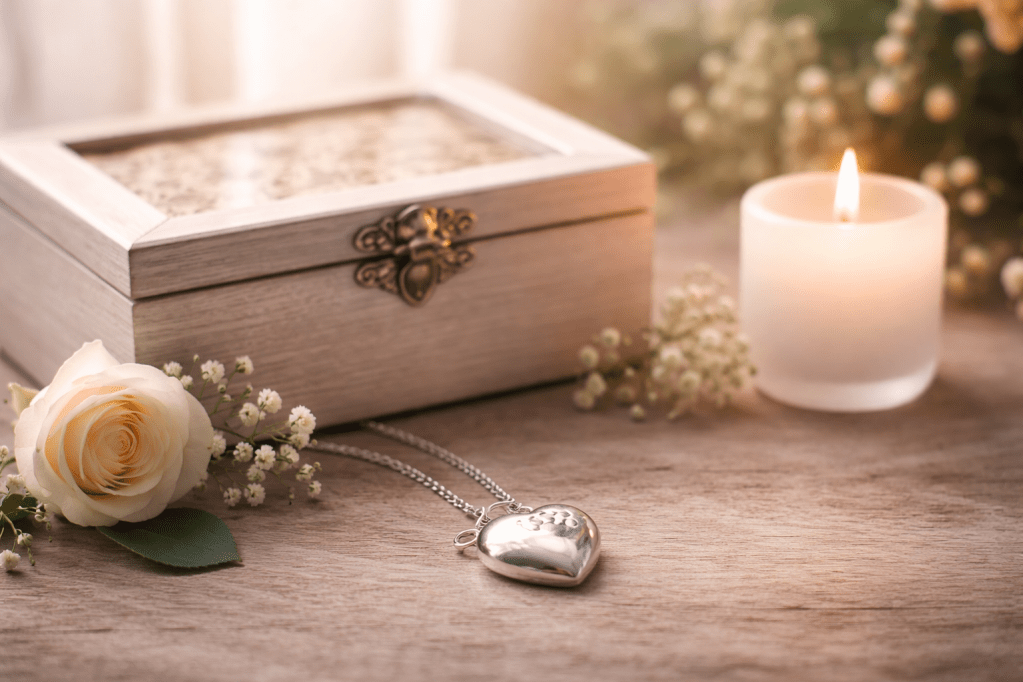
Choosing a memorial item is not a typical purchase. It’s an emotional decision made during a season of grief, remembrance, and reflection. Because of that, many people rush the process or focus on the wrong details — only to realize later that the item doesn’t bring the comfort they hoped for.
Below are some of the most common mistakes people make when choosing memorial jewelry or keepsake boxes — and how to avoid them with compassion and clarity.
1. Choosing Too Quickly, Before You’re Ready
Grief has no timeline, but purchasing decisions often feel urgent. Many people buy memorial items immediately after a loss, believing they must act quickly to honor their loved one.
While that urgency is understandable, it can lead to regret.
How to avoid this mistake:
- Give yourself permission to pause
- Start with something simple and meaningful
- Remember that memorials can be added to or changed later
A keepsake box can be a gentle first step, while memorial jewelry may feel more appropriate once emotions settle.
2. Focusing on Price Instead of Meaning
It’s natural to consider cost, but choosing solely based on price can leave you with an item that doesn’t feel personal or comforting.
More expensive does not always mean better — but meaning should always outweigh cost.
What to prioritize instead:
- Personal connection
- Symbolism (faith, love, legacy)
- Comfort and usability
- Longevity and quality
A thoughtfully chosen, modest piece often holds more emotional value than something elaborate but impersonal.
3. Not Considering How the Item Will Be Used
One of the most common oversights is not thinking about daily use.
Memorial jewelry is worn — sometimes every day. Keepsake boxes usually remain in one place.
Ask yourself:
- Will this be worn daily or only on special occasions?
- Is the jewelry lightweight and comfortable?
- Will the box be stored securely and respectfully?
An item that doesn’t fit into your lifestyle can unintentionally become a source of frustration instead of comfort.
Those who feel drawn to a daily, wearable reminder may appreciate exploring thoughtful memorial jewelry options designed for comfort, discretion, and lasting meaning.
4. Over-Personalizing Too Early
Personalization can be beautiful — names, dates, photos, and engraved messages often deepen meaning. But too much personalization too soon can feel overwhelming later.
Grief evolves, and what feels right today may feel different in a year.
A balanced approach:
- Start with subtle personalization
- Avoid long messages written in the earliest stages of grief
- Leave room for future additions or changes
Many people prefer timeless symbols or short inscriptions that continue to resonate over time.
5. Not Thinking About Who the Memorial Is For
Some memorials are deeply personal. Others are meant to be shared.
A common mistake is choosing an item without considering whether it will eventually be passed down, shared among family members, or kept privately.
Helpful considerations:
- Will multiple people want to remember this loved one?
- Should one item remain in the family home?
- Is this something that may be inherited by children or grandchildren?
Keepsake boxes often serve families well, while memorial jewelry tends to be more personal and individual.
6. Ignoring Faith or Spiritual Meaning
For many families, faith plays a central role in remembrance. Ignoring spiritual symbolism can leave a memorial feeling incomplete.
Crosses, scripture, prayer cards, or symbolic imagery often provide comfort beyond words.
If faith matters to you:
- Choose designs that reflect hope and eternal life
- Avoid purely decorative items that lack meaning
- Consider how the item supports reflection and prayer
A memorial can be both beautiful and spiritually grounding.
For those whose faith is an important part of remembrance, many families also find comfort in faith-centered ways to honor a loved one that reflect hope, prayer, and eternal life.
7. Assuming There’s Only One “Right” Choice
Perhaps the biggest mistake is believing you must choose either memorial jewelry or a keepsake box.
For many families, the most comforting solution is both:
- A keepsake box as a place of stillness and reflection
- Memorial jewelry as a daily, portable connection
Grief isn’t linear, and remembrance doesn’t have to be limited to one form.
Final Thoughts: Choose With Compassion for Yourself
There is no perfect memorial — only what feels right for you and your family.
Avoiding these common mistakes isn’t about getting everything right. It’s about choosing with patience, intention, and kindness toward yourself during a tender time.
If you’re still deciding between options, you may find it helpful to read our detailed comparison:
Memorial Jewelry vs. Keepsake Boxes: Which Is Right for Remembering a Loved One?
Above all, remember this:
A memorial’s value comes not from perfection, but from love.
Affiliate Disclosure: Some links in this article may be affiliate links. As an Amazon Associate and participant in other affiliate programs, we may earn from qualifying purchases at no additional cost to you.
 Cherished Moments
Leave a comment